Prepare for the first 72 hours—without the panic.
A compact, practical guide for ordinary people getting ready to move through a natural disaster or infrastructure failure with more clarity and less guesswork.
Start here
Start Here: Your First Step Toward Readiness
Preparedness doesn’t have to be overwhelming. Here’s the simplest way to begin.
The model
What 72 hours means
A practical planning window for water, food, health, communication, and movement—not a prediction about every emergency.
Why it matters
Make the next decision easier
A small, familiar plan reduces guesswork when normal routines, power, roads, or water access are changing.
The simplest kit
Start with the core
Water, familiar food, medication, light, a weather layer, written contacts, and a route card.
Read the main guideFor ordinary households
Preparedness that meets real life where it is.
You do not need a garage full of gear or a survivalist identity to make a thoughtful plan.
Ready in 72 is for civilians, families, roommates, caregivers, and anyone who wants a calmer starting point when a storm, outage, evacuation, or other disruption changes the plan for the day.
Why 72 hours?
A useful frame for the first three days.
The 72-hour model does not predict every emergency. It gives ordinary households a practical horizon for water, food, health, communication, and movement while normal systems may be changing.
0–24
Stabilize
Account for people and pets. Check official information. Gather the essentials.
24–48
Adapt
Use supplies thoughtfully. Adjust routes, power, food, and communication.
48–72
Keep going
Refresh the plan, protect health, and follow the next official instruction.
Watch & learn
Real skills, fifteen seconds each.
Short, practical videos — no gear required and no fear-mongering. Just one useful thing per clip, tap to play with sound.
The Rule of 3s
Air, shelter, water, food — in that order.
Make water safe
Rolling boil: one minute. Three above 6,500 ft.
Pack in order
Water, food, shelter, first aid, light, documents.
Call for help
Three of anything means distress. Pause, repeat.
Copy your documents
A waterproof bag and phone photos go a long way.
Want one like this every week? Survival Weekly delivers a new skill every Monday — $1 a month.
A look inside
See the guide before you decide.
A few pages from the full field guide, built for practical reading and real household decisions.
The full edition expands on the first 72 hours with water, food, shelter, first aid, tools, documents, evacuation, and printable worksheets.
Explore the full field guideWhat’s inside
The essentials, organized by the decisions they support.
A short guide you can read, use, and revisit as your household changes.
Water
Make the first decision easier when normal water access is uncertain.
Food
Choose practical fuel that fits your household, not an imaginary one.
Shelter
Think through warmth, weather, and the places you may actually go.
First aid
Keep everyday needs visible and ready to reach when routines change.
Tools
Prioritize versatile basics over a heavy pile of maybe-useful gear.
Documents
Gather the information that helps your household move with less friction.
Packing strategy
Build a bag you can lift, find things in, and refresh before you need it.
A visual plan
What the first 72 hours look like.
Start with what protects people, then move outward to the supplies and decisions that help your household stay oriented.
01
Stabilize
People · water · health
02
Orient
Light · contacts · route
03
Adapt
Food · shelter · next step
Why this guide
Prioritize, don’t pile on.
Most readiness advice starts with a long list. This guide starts with a better question: what will help your household keep moving, given the space, money, weather, and people you actually have?
A useful frame of time
The first stretch of disruption is easier to navigate when your basics are together and your next decision is visible. Use the guide to start small, then build a plan you can maintain.
A clear first step
Beginner Readiness Bundle
The complete starter set for building a plan you can actually use.
If the micro-guide is your first step, this is the next one: four practical downloads in one purchase for $4.99, including the main guide, checklist pack, scenario pack, and printable emergency card.
Micro-guide · $2.50
Read the essentials
One compact guide for the first 24–72 hours.
Bundle · $5.00
Build the whole starter plan
Guide, checklists, scenarios, and emergency card.
Survival Weekly
One illustrated issue every week — diagrams, checklists, and one practical skill your household can practice in about 30 minutes.
Issue 2 · out now
Shelter & Heat: Warm Without the Grid
Dress in layers, turn one room into your warm room, and heat it safely when the power is out — with a 15-second skill video on the emergency-blanket wrap.
Every Monday
A new illustrated issue + a 15-second skill video
Keep every past issue and video while your membership is active. Subscribe once — $1 a month, cancel anytime.

Free tools
Start with something useful.
Practical resources to help you begin, test, and keep your household plan current.
Free Emergency Bag Printable
A printable inventory sheet for checking water, food, health, light, documents, household needs, and review dates.
Download freeFree 72-Hour Mini-Guide
A short civilian-friendly introduction to the 72-hour model, portable essentials, and the first decisions to make.
Download freeFree Emergency Card
A printable emergency contact and household plan card for your wallet, bag, vehicle, or home plan folder.
Download free10-Minute Emergency Prep Checklist
A free, one-page checklist for taking your first practical readiness step in ten minutes.
Download freeNew field guide
Wild Food, Wise Choice
Learn the safer decision before you take a bite.
An illustrated North American guide to identifying documented wild-food plants, understanding preparation boundaries, spotting dangerous look-alikes, and responding to suspected plant exposure.
Get the guide — $3.00
A practical place to start
Build the kit around the plan.
Need a starting point for your emergency gear? Compare a few practical categories as you build a kit that fits your household.
We may earn a commission if you purchase through these links, at no extra cost to you. Always check product details, current price, and fit for your needs before buying.
Questions, answered
Keep it practical.
A good plan should get clearer—not more complicated—the more you use it.
How do I receive the guide?
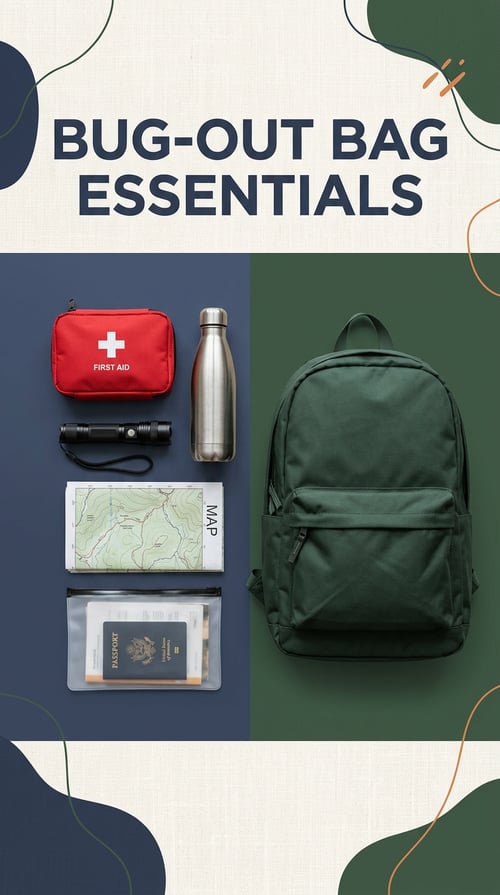
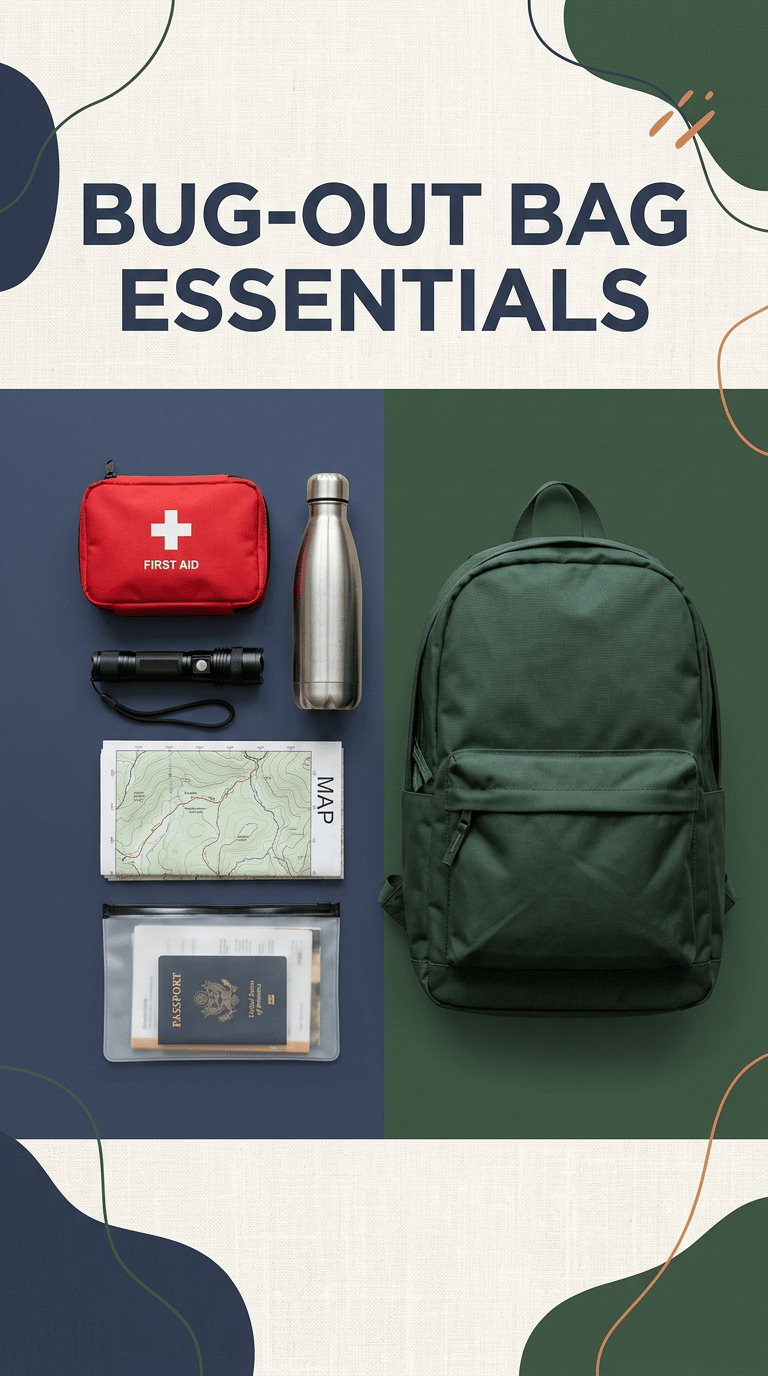
Bug-Out Bag Essentials is a digital guide. After checkout, follow the delivery instructions to access your copy—there is no physical package to wait for.
Who is this guide for?
It is for ordinary people and households who want a clear starting point for 24–72 hour mobility during a natural disaster or infrastructure failure. It is intentionally civilian-friendly, not tactical or extreme-prepper content.
What is Survival Weekly?
A monthly membership: one new illustrated survival issue every Monday — diagrams, checklists, and one practical skill you can practice in about 30 minutes, plus a short narrated skill video with each issue. Issues and videos land in your library automatically, and you keep everything while your $1/month membership is active.
Can I adapt it to my household?
Yes. The guide focuses on decisions and tradeoffs so you can adjust for your household size, budget, climate, mobility needs, pets, medications, and likely travel distance. It is a framework, not a universal item list.
Start with one useful thing
A calmer bag starts with a clearer plan.
A compact, civilian-friendly emergency readiness guide covering water, food, shelter, first aid, tools, documents, and packing strategy for 24–72 hour mobility during natural disasters or infrastructure failures.